

Table of Contents
1. Introduction
2. Mastering Effective Study Techniques
3. Cracking Practical and Lab Exams
4. Skills Every Computer Science Student Should Master
5. Essential Teacher Skills for Student Success
6. Discipline and Self-Management
7. Time Management for Students
8. Building Reading and Learning Habits
9. Integrating Arts and Culture into Education
10. Conclusion
Introduction
Being a student today comes with many challenges. There is always pressure to score well, complete assignments on time, clear practical exams, and also think about future careers. Many students work hard, yet they feel confused and stressed because they are not sure if they are studying in the right way.
The truth is simple. Academic success does not depend only on how many hours you study. It depends on how you study, how you manage your time, and which skills you build along the way. This is where the right study tips, useful student skills, and proper time management play an important role.
Research in education shows that students who follow effective learning methods, plan their time properly, and maintain discipline perform better in exams and feel less pressure. These habits also help students become more confident, organised, and career-ready.
A study of introductory biology students found that greater use of active study strategies, such as self-quizzing, was linked to higher exam grades, yet only 13.5% of students identified active strategies as something they should use more (Source: PMC/NCBI).
When students combine discipline and motivation, time management for students, and use modern learning tools, then learning becomes structured instead of stressful. Concepts become clearer. Exams feel more manageable.
This long-form guide is written for college students, postgraduate students, parents, and educators. It explains what truly helps students succeed and grow. Each section introduces an important area of student life and then directs readers to detailed articles for deeper understanding.
1. Mastering Effective Study Techniques
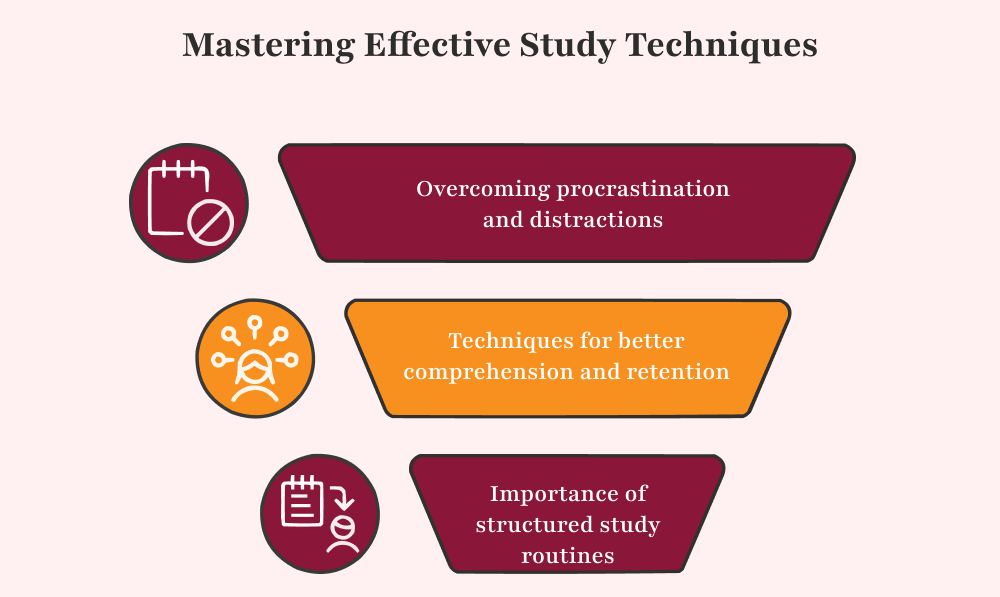
Many students believe that studying for long hours is the key to success. But in reality, studying without a method often leads to confusion and fatigue.
A structured routine gives you a direction for daily study. When students study at fixed times, their minds become trained to focus. This improves concentration and overall academic performance.
Simple study plans help students divide subjects evenly. Instead of studying everything at once, students can focus on one topic at a time. This eventually helps in reducing exam stress and improves understanding.
Moreover, studies show that students with regular routines remember information better and revise more effectively.
Good marks come from understanding, not memorising. Smart learning strategies help students remember concepts for a longer time.
Reading actively, making short notes, revising regularly, and testing oneself are all part of effective learning. Teaching a concept to a friend or explaining it aloud also improves clarity.
These are considered some of the best study methods for students because they strengthen memory and understanding.
Procrastination is common among students. It often happens due to fear, overload, or distractions like mobile phones.
Keeping the phone away during study time improves focus. Studying in short sessions with small breaks helps students stay fresh and motivated. Setting small daily goals makes studying feel achievable.
Read More: 🔗 10 Tips on How to Study Effectively2. Cracking Practical and Lab Exams
Practical exams are an important part of college education. They test how well students can apply what they have learned.
Students often fear practical exams because they lack practice. But when they attend regular lab sessions, it significantly improves their practical exam preparation and confidence.
Understanding the purpose of each experiment helps students perform better than simply memorising steps.
Practical exams reward hands-on learning. Repeating experiments improves lab skills and accuracy.
Students who practise regularly perform better in assessments because they are familiar with the tools, procedures, and time limits.
Time is limited in practical exams. Reading instructions carefully and planning the steps before starting helps save valuable time.
Good time management allows students to stay calm and complete tasks correctly.
Read More: 🔗 Tips to Crack Practical Exams in College3. Skills Every Computer Science Student Should Master
Computer Science is a skill-based field. Theory alone is not enough to succeed.
Using the right software for Computer Science students makes learning easier. Coding editors, debugging tools, and collaboration platforms help students practise efficiently.
Familiarity with essential programming tools also improves productivity and builds confidence while working on projects and assignments.
Programming requires regular practice. Daily coding, even for a short time, strengthens logic and improves problem-solving skills.
Strong technical learning habits help students understand complex topics without fear and reduce dependency on rote learning.
Students with strong Computer Science skills have better internship and job opportunities. Employers prefer students who can apply concepts practically.
Moreover, skill-based learning plays a major role in long-term career growth.
Read More: 🔗 8 Study Tips That Will Make You a Successful Computer Science StudentRead More: 🔗 Must-Have Software for Computer Science Students
4. Essential Teacher Skills for Student Success
Teachers have a strong influence on student learning. The skills teachers possess directly shape how students think, learn, and grow.
A good teacher explains concepts clearly and encourages students to ask questions. This improves student engagement and overall understanding.
Students also learn better when teachers guide them patiently and supportively, instead of creating fear or pressure in the classroom.
Clear communication, empathy, adaptability, and strong subject knowledge are essential teacher skills that directly impact student success.
Strong mentorship and guidance skills help students grow not only academically but also emotionally and personally.
Read More: 🔗 Top 10 Skills of a Good Teacher5. Discipline and Self-Management
Discipline is one of the most important habits for students.
Self-discipline helps students stay focused and organised. It also reduces distractions and improves consistency.
Disciplined students develop better academic focus and confidence.
Discipline does not mean strict rules. It means following simple routines daily. Studying regularly, sleeping on time, and limiting distractions build strong habits.
This not only helps in improving study routines but also helps in enhancing one’s personal habits.
Students who are disciplined revise regularly and prepare better for exams. This leads to exam success without last-minute stress.
Read More: 🔗 The Significance of Discipline in a Student's LifeRead More: 🔗 Achieve Excellent Marks in Exams
6. Time Management for Students

Poor time management is a major reason for student stress. Working on it can bring major positive changes in a student’s overall life.
Planning daily tasks improves study planning. Simple to-do lists help students stay organised.
Strong time management skills reduce pressure and improve overall productivity.
Weekly schedules help students focus on important tasks first. This creates a healthy balance between studies and personal life.
PG students often face heavy workloads. Advanced productivity techniques such as time blocking help manage pressure and avoid burnout.
Read More: 🔗 The Importance of Time Management for StudentsRead More: 🔗 Mastering Time Management for PG Students – Top Strategies
7. Building Reading and Learning Habits
Reading is a powerful learning tool that supports both academic success and personal growth.
Students should start small. Reading daily, even for 15–20 minutes, gradually improves learning efficiency over time.
It also helps students understand different perspectives and enhances their own thinking.
Regular reading improves vocabulary, perspective, and expression. Strong reading habits help students write clearer and better-structured exam answers.
Dr. Seuss beautifully said, “The more that you read, the more things you will know. The more that you learn, the more places you’ll go.”
Reading builds curiosity and supports lifelong learning, which remains essential even beyond college. Reading is no less than magic.
Read More: 🔗 How to Form a Reading Habit8. Integrating Arts and Culture into Education

Arts and cultural activities help students express their thoughts and emotions freely. Activities like music, dance, drama, and art reduce stress and make learning more enjoyable.
Creative learning also improves imagination and helps students stay mentally balanced.
Cultural activities help students develop important soft skills needed in life and work, such as:
Together, these skills support holistic development and personal growth.
Academic studies can sometimes feel heavy. When students balance studies with creative activities, learning feels lighter and more meaningful. Creativity keeps students motivated and helps them stay interested in learning.
In this way, the arts act as a source of energy that supports both academic and personal development. Education should support overall development, not just academics.
Read More: 🔗 The Importance of Arts and Culture in EducationConclusion
Student success is built slowly, not overnight. One must understand that it comes from small daily efforts, clear habits, and the right approach to learning.
Using simple study tips, managing time wisely, maintaining discipline and motivation, and developing useful student skills helps students achieve steady academic success without unnecessary pressure.
Every student faces challenges. What matters is learning how to handle them calmly and confidently. With the right guidance, supportive teachers, and helpful resources, students can grow not only in marks but also in confidence and clarity.
MIT ACSC supports this journey by offering academic resources, skill-focused programs, and a learning environment that encourages growth.
Visit MIT ACSC Today and take a practical step towards a more organised and confident student life.