

1. Introduction
Every year, thousands of students in India finish their Class 12 and face the big question: what next? For those drawn toward computers and technology, the BCA course has quietly become one of the most popular answers.
Short for Bachelor of Computer Applications, it offers a practical, job-ready education in just three years. Whether you come from a science or commerce background, a BCA in India opens doors that many traditional degrees simply cannot. This guide walks you through everything you need to know.
2. What Is BCA and How Is the Course Structured?
The BCA degree, or Bachelor of Computer Applications, is a three-year undergraduate program that focuses on computer science, software development, and IT applications. It sits in that sweet spot between a pure engineering degree and a short diploma course.
Here is what the typical structure looks like:
- Duration: 3 years, divided into 6 semesters
- Eligibility: Candidates must have passed Class 12 from a recognized board. Most colleges accept students from Science, Commerce, or even Arts streams, provided they have Mathematics as a subject.
- Admission: Entry is through merit-based selection or entrance tests, depending on the institution.
The BCA syllabus is designed to balance theory and hands-on work. Core subjects include:
- Programming languages like C, C++, Java, and Python
- Database Management Systems (DBMS)
- Web technologies and software engineering
- Data structures, networking, and operating systems
- Mathematics and statistics for computing
One thing students appreciate about the BCA curriculum is that it mixes classroom concepts with lab work. You do not just read about how a database works. You actually build one. That balance between understanding theory and applying it in practice is what sets this undergraduate IT course apart from many others.
For more details on specific subjects, read more about BCA Courses in India.3. Why BCA Is a Smart Career Choice After 12th?
A lot of students ask: Is BCA good after 12th? The short answer is yes, especially if you enjoy problem-solving and working with technology.
Here are the reasons why students are choosing BCA after 12th in growing numbers:
- Flexibility: Both science and commerce students can apply, making it far more accessible than engineering.
- Relevance: The curriculum is regularly updated to align with the IT industry's needs, covering cloud computing, mobile development, and cybersecurity basics.
- Speed: You graduate in three years and can enter the job market or pursue higher studies like MCA or MBA relatively quickly.
When comparing IT education in India options, BCA vs B.Tech often comes up. B.Tech takes four years and has a heavier engineering focus. BCA focuses on applications, software, and practical IT skills. For students who want to work in software companies, web development, or IT services, BCA is often the smarter, faster route.
Read more: A Career in BCA After Class 12 and A Career in BCA After Class 124. Benefits of Studying the Bachelor of Computer Applications at MIT ACSC

The BCA degree benefits go well beyond getting a certificate. At MIT ACSC, the program is structured to give students real, usable skills from day one.
Some of the key advantages of BCA course here include:
- Technical depth: Students gain proficiency in programming, database handling, software tools, and networking.
- Industry-oriented training: The curriculum is aligned with what companies actually look for during placements.
- Project-based learning: Students work on live projects and case studies, building a portfolio before they even graduate.
When you look at the benefits of BCA degree in India broadly, it is clear that the combination of low barrier to entry, solid technical training, and strong career outcomes makes it a compelling option. MIT ACSC takes that further by pairing classroom learning with mentorship from faculty who bring real industry experience into the teaching environment.
Read more: Benefits of Studying Bachelor of Computer Application5. Inside the BCA Learning Experience
Step into a BCA classroom at MIT ACSC and you will notice something right away: it feels active. Lectures are paired with lab sessions where students write and debug actual code.
Assignments push you to apply what you learned that week, and projects often require teamwork, mirroring how software development works in the real world.
Faculty members play a central role here. They guide students through both technical concepts and the softer skills like problem-framing and presentation that employers value.
Academic mentoring ensures that students who struggle with subjects like data structures or mathematics get support before it becomes a bigger issue. It is the kind of environment where learning feels purposeful, not passive.
Read more: about Inside the Classrooms of BCA Colleges6. Campus Life and Student Experience in BCA Colleges at MIT ACSC

BCA student life at MIT ACSC reflects what modern college life for IT students should look like. The campus offers well-equipped computer labs, a resource-rich library, and spaces designed for group work and independent study.
Beyond academics, students can participate in:
- Technical clubs focused on coding, hackathons, and app development
- Cultural and sports activities that build teamwork and leadership
- Peer learning groups where senior students mentor juniors
Good campus facilities for BCA students matter because technical skills alone do not land jobs. Employers look for communication, adaptability, and teamwork. A well-rounded campus life develops exactly those qualities. Read more: Campus Life at BCA Colleges
7. Career Scope After Completing BCA
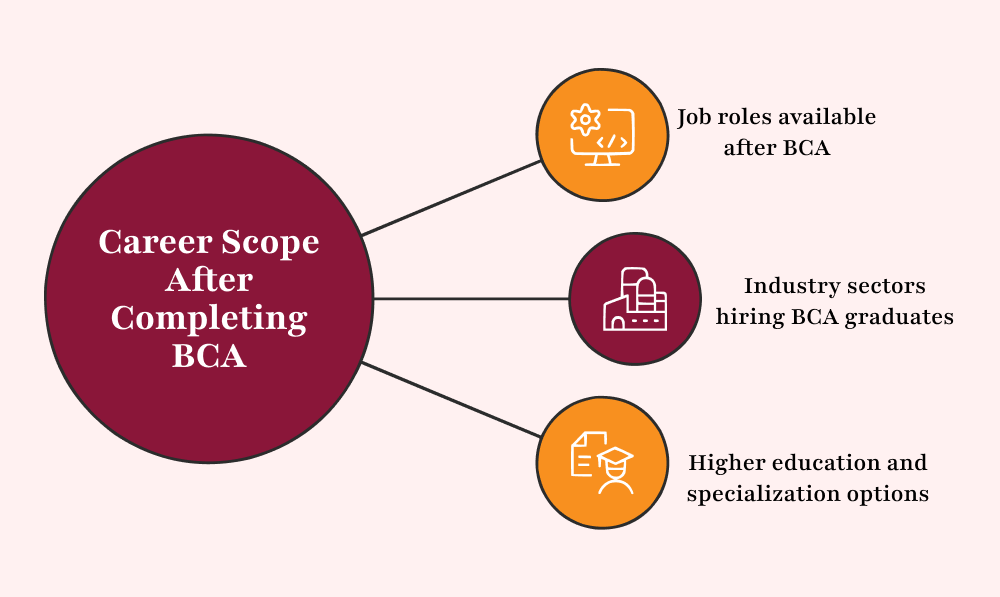
The scope of BCA degree in today's job market is genuinely broad. Career opportunities after BCA span multiple industries, not just pure software.
Common job options after BCA degree include:
- Software Developer or Junior Programmer
- Web Designer and Front-End Developer
- System Analyst
- Database Administrator
- IT Support Specialist
- Network Administrator
Industries actively hiring BCA graduates include banking and finance (for fintech roles), healthcare IT, e-commerce, and government digital services. Beyond jobs, many students
use BCA as a foundation for an MCA, MBA in IT, or specialized certifications in cloud computing, data science, or cybersecurity.
Read more: What Should We Do After BCA? Explore the Scope8. BCA Salary Trends and Future Growth in India
- BCA salary for freshers typically ranges from Rs. 2.5 to Rs. 4.5 LPA depending on the role, city, and company.
- With 3 to 5 years of experience, professionals can earn between Rs. 6 to Rs. 10 LPA in mid-level IT roles.
- Specialized roles in cloud platforms, data analytics, or cybersecurity can push salaries significantly higher.
The future scope of BCA in India looks strong. India's digital economy is growing at a rapid pace, and demand for trained IT professionals at entry and mid-levels continues to outpace supply. IT career growth for BCA graduates is steady, especially for those who keep learning and add certifications to their profile.
Read more: Scope of BCA Degree: Salary, Jobs & Future Growth9. Advantages of Studying BCA in MIT ACSC
Why study BCA in Pune specifically? Pune holds a unique position as one of India's leading IT education hubs, home to hundreds of tech companies and a dense network of IT parks. This geographic advantage translates directly into internship opportunities, industry visits, and campus hiring for students at BCA colleges in Pune.
MIT ACSC leverages this location by building active partnerships with local and national IT firms. Students benefit from placement drives, industry guest lectures, and real-world project collaborations. Compared to smaller cities, Pune offers students a head start because the professional IT ecosystem is already on your doorstep.
Read more: Exploring the Advantages of Pursuing a BCA Course in Pune10. Challenges Faced by BCA Students and How to Overcome Them
No honest guide skips the hard parts. Problems faced by BCA students are real, and it helps to know them in advance.
Common challenges include:
- Coding difficulty: Programming feels overwhelming for students new to it. Consistent daily practice, even 30 minutes, builds fluency over time.
- Heavy project workload: Managing multiple projects and assignments together is stressful. Time blocking and group coordination help.
- Staying current: Technology changes fast. Following tech blogs, taking free online courses, and attending college workshops help students stay updated.
How to succeed in BCA course comes down to discipline, curiosity, and using the resources around you. MIT ACSC provides academic support systems precisely for these moments.
Read more: Navigating the Challenges of BCA Courses11. Choosing the Right BCA College in India
How to choose the best BCA college is a question with several moving parts. Here is what genuinely matters:
- Accreditation: Look for institutions accredited by NAAC or NBA. It signals quality.
- Faculty: Experienced teachers with industry backgrounds make a real difference in learning outcomes.
- Infrastructure: Labs, internet access, and learning tools should be up to date and well-maintained.
- Placements: Check actual placement records, not just promises. Average salary, top recruiters, and placement percentages tell the real story.
- Reputation: Rankings help, but alumni feedback is even more telling.
MIT ACSC ranks among the top BCA colleges in India and the best BCA colleges in Pune for a reason: it combines academic rigor with genuine career support.
Read more: No 1 BCA Colleges in India and Top-Ranked BCA Colleges in Pune 202512. Conclusion
The BCA course has earned its reputation as one of the most practical and future-ready undergraduate programs in India. It gives students real technical skills, broad career options, and a clear path to growth without the four-year commitment of an engineering degree. The scope of BCA in India is only growing as digital infrastructure expands across industries.
Choosing the right college, building strong skills, and planning your career with intention make all the difference. At MIT ACSC, the goal is to ensure that every BCA student in India graduates with the knowledge, experience, and confidence to thrive in a competitive industry.